


Over the years, travelling by plane has become more accessible thanks to the emergence of low-cost airlines and the diversification of their offerings. However, this democratisation of air travel has been accompanied by a phenomenon that is causing increasing dissatisfaction among travellers: the constant rise in baggage charges. Whether it's hold baggage or hand baggage, the fees charged by airlines, whether low-cost like EasyJet or traditional like Air Franceare increasing all the time.
This subject is particularly relevant today, as airline fare policies are changing rapidly, making travel planning more complex and costly. With increasing restrictions on weight and luggage size, These changes have a direct impact on the travel experience, prompting many passengers to look for alternatives to optimise their journeys. These changes have a direct impact on the travel experience and are prompting many passengers to look for alternatives to optimise their journeys.
In this article, we analyse why the price of airline baggage continues to soar. We'll start by exploring the changes in airline pricing policies, before looking at the various factors that influence the price of your plane ticket.
A steady rise : Understanding the evolution of air baggage prices
Low-cost airlines and their pricing policies
Low-cost airlines such as’EasyJet, Transavia, Vueling or Volotea, have built their business model on low-cost tickets, but make up for this largely through ancillary revenues, in particular the costs associated with baggage. These fees, which can sometimes exceed the cost of the ticket itself, have become a real financial windfall for these companies.
For example, with EasyJet, standard cabin baggage (45 x 36 x 20 cm) is free only for passengers who have booked certain fares or options such as EasyJet Plus. For any additional or larger baggage (56 x 45 x 25 cm), charges apply, ranging from €8 to over €48 depending on the size and the time of booking. Hold baggage weighing up to 23 kg starts from €12. costs are rising rapidly if the weight exceeds this limit, with supplements of €18 per 3 kg.
Transavia has recently changed its policy by making paying for cabin baggage for certain fares. Prices range from €15 to €65, depending on size and check-in time. Volotea charges up to €65 for standard cabin baggage if the option is not booked in advance.
These pricing policies aim to maximise ancillary revenue while limiting the delays caused by an excess of cabin baggage. These additional costs generate hundreds of millions of euros for low-cost airlines every year.
Traditional companies are not left behind
Traditional airlines, such as Air France and KLM, have also reviewed their pricing policies for checked baggage to increase their revenues. For example, Air France now applies a progressive fare structure for excess baggage. A standard baggage item (23 kg) is included in certain Economy fares, but any baggage exceeding this weight will incur additional charges ranging from 55 to over €300, depending on the point of arrival and the excess weight.
During the high season, Air France also adds a surcharge of €5 to €10 on the usual charges for extra or excess baggage. These adjustments reflect a general trend in the industry: even so-called 'premium' airlines are adopting practices once associated with low-cost carriers to offset rising operational costs.
What factors influence the price of airline baggage?
Weight and size of luggage
The LUGGAGE WEIGHT is undoubtedly one of the most decisive criteria in calculating fares. Airlines impose strict limits to avoid overloading the aircraft, which could increase fuel consumption and operational costs. In general, standard hold baggage must not exceed 23 kg, although some companies allow up to 32 kg for an additional fee. Any excess weight is subject to a surcharge, often at a high rate, which can reach several tens of euros per extra kilo.
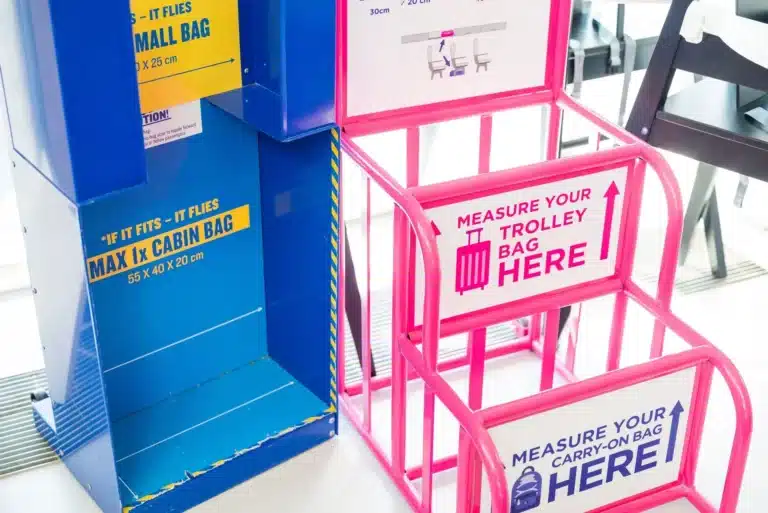
For the cabin baggage, If you're flying with an airline, the restrictions are even stricter. The authorised size and weight vary from airline to airline, but rarely exceed 10 kg or dimensions of 55 x 40 x 20 cm. For example, some low-cost airlines such as EasyJet and Ryanair now charge for any baggage carried on board. cabin baggage exceeding these limits or requiring placement in the upper compartment.
These restrictions force travellers to choose between travelling lightly loaded or paying extra to transport their personal belongings, which can quickly lead to a situation where they have to carry a large amount of luggage. increase the price of baggage on flights.
Destination and type of flight
The destination also plays a key role in calculating the price of hold baggage. Short- and medium-haul flights, often operated by low-cost airlines, charge relatively high fees for checked baggage. checked baggage to compensate for their lower ticket margins. For example, an intra-European flight with Transavia or Volotea can charge between €15 and €50 for standard hold baggage.
On the other hand, on long-haul flights operated by traditional airlines such as Air France, hold baggage is often included in the price of the ticket for certain fare classes. However, for “light” or “basic” economy fares, even on these international flights, passengers have to pay a supplement of up to 50 to over €100.
The type of flight (domestic versus international) also influences these fares. Domestic flights tend to apply a fixed charge for checked baggage, whereas international flights may include a surcharge linked to local regulations or logistical costs.
Additional options and hidden costs
More than just luggage transport, There are many hidden costs that can add to the bill. These include :
- Excess weight If your baggage exceeds the authorised limit (generally 23 kg), you may be charged between €10 and €20 per kilo of excess baggage on certain airlines such as Air France or EasyJet.
- Additional luggage Adding a second or third piece of luggage can be expensive, with fares of up to €150 depending on the carrier and destination.
- Choice of seats with extra space Some airlines make the purchase of a premium or priority seat a condition for taking an extra cabin baggage item.
- Luggage insurance Insurance: Although optional, this insurance is often offered at the time of booking to cover any damage or loss. It represents a significant additional cost.
These additional charges reflect a commercial strategy aimed at maximising ancillary revenue while offering passengers apparent flexibility. However, they make it difficult to assess the total cost of a journey at the initial booking stage.
This analysis shows that several factors - weight, size, destination and options - contribute to the increase in baggage costs. Understanding these factors enables travellers to anticipate these costs and optimise their budget.
How can I pay less for checked baggage?
Costs related to cost of baggage by air can quickly add up to a hefty travel budget. Fortunately, there are a number of strategies for reducing these costs and travelling with greater peace of mind. Here are a few practical tips to help you avoid paying too much.
Travelling light with just one piece of cabin baggage on an aeroplane
One of the simplest solutions for avoiding baggage fees is to travel light, taking with you only the essentials. cabin baggage. To do this, it is essential to optimise the space available and to comply with the restrictions imposed by the airlines. Here are a few tips:
- Choose the right suitcase Check the dimensions authorised by the carrier.
- Pack intelligently Use compression bags to reduce the volume of your clothes and limit yourself to the essentials.
- Make the most of your accessories Wear your bulkiest clothes (coats, shoes) during the flight to save space in your baggage.
- Avoid unnecessary liquids : Respect the rule of containers of less than 100 ml and favour solid formats (soaps, shampoos).
Travelling with just one piece of cabin baggage can not only save you money on hold fees, but also simplify your journeys at the airport.
Opt for a door-to-door luggage delivery service
For those who wish to stress-free travel or baggage restrictions, a practical alternative is to use a door-to-door baggage delivery service such as LRC Lugagerie. This service allows your luggage to be shipped directly from your home to your final destination, whether in France or elsewhere in Europe.
With LRC Bagagerie, you don't have to worry about transporting your suitcases, nor do you have to put up with the cost of airline luggage and unexpected airport fees.
This service is also particularly useful for :
- Family trips with several suitcases.
- Extended stays requiring specific equipment, special luggage (such as sports equipment, etc.)
- LBusiness travellers who want to travel light and save time.
By opting for LRC Lugagerie, With baggage transport, you simplify your travel experience while avoiding the often high costs associated with baggage. For more information and to obtain your baggage transport tariff in 2 minutes click here !
Conclusion: Anticipate and reduce the cost of airline baggage
The prices of luggage transport are constantly on the increase, driven by airlines' pricing policies and growing restrictions. Between weight limits, hidden charges and differences between destinations, these costs can quickly put a strain on travellers' budgets. In the future, this trend is set to continue, making it essential to find solutions to help you travel with greater peace of mind.
To avoid these hassles and simplify your travel, remember to LRC Lugagerie, a door-to-door delivery service that allows you to travel light while shipping your luggage directly to its destination.



 Français
  English (UK)
  Deutsch
  Español
  Italiano