


La Société Nationale des Chemins de fer Français, is the main player in the rail transport in France, connecting millions of passengers every year. Rail travel plays a crucial role in sustainable mobility, offering a practical and environmentally-friendly alternative to other means of transport. Whether you want to discover destinations in France or travelling in Europe, Rail journeys offer comfort and efficiency.
Recently, the SNCF has introduced new restrictions on baggage, aimed at optimising passenger comfort and safety. This article explores the details of these regulations, their implications and advice on how to adapt to them. These rules apply to regional trains, TGVs, as well as night trains and international routes such as those linking Paris to Venice, London or Brussels.
The new rules introduced by the SNCF is imposing stricter restrictions on the size, weight and types of baggage allowed on its trains. These restrictions are designed to reduce the inconvenience of carrying bulky baggage, such as large suitcases, and improve the travel experience for all passengers.
Details of the new restrictions on luggage and travel by sncf train
What types of baggage are affected?
Hand luggage and hold luggage are affected by the new restrictions. Train passengers must ensure that their personal effects comply with the standards set. These restrictions apply to both national and international journeys, whether they involve travelling in France or move to other European countries.
Specific height and weight restrictions
-
Hand luggage: maximum 40 cm x 30 cm x 15 cm
-
Suitcase: maximum 70 cm x 90 cm x 50 cm
-
Special baggage (musical instrument, covered bicycle, folded bicycle, scooter and folding wheelchair): maximum 90 x 130 x 50 cm.
- 2 suitcases + 1 piece of hand luggage
- 1 suitcase + 1 special bag + 1 carry-on.
It is important to note that all baggage must be labelled and you must be able to wear them on your own in one go. The skis have no maximum size, but are limited to one pair per person.
Prohibited items and additional restrictions
Some items, Passengers are strictly forbidden to carry any items on board, such as hazardous materials, bulky objects and appliances powered by non-compliant batteries. Passengers should consult the general conditions for further details. These measures apply to both tourist trains and regular services, including the TER and panoramic trains through spectacular landscapes in France and Europe.
Travelling by SNCF train: The reasons behind the new restrictions
Passenger safety
Limiting the size and weight of luggage helps to minimise the risk of injury or incidents in the event of sudden movement of the train. Passengers on night trains or exceptional trains such as the’Orient-Express appreciate this particular attention to safety.
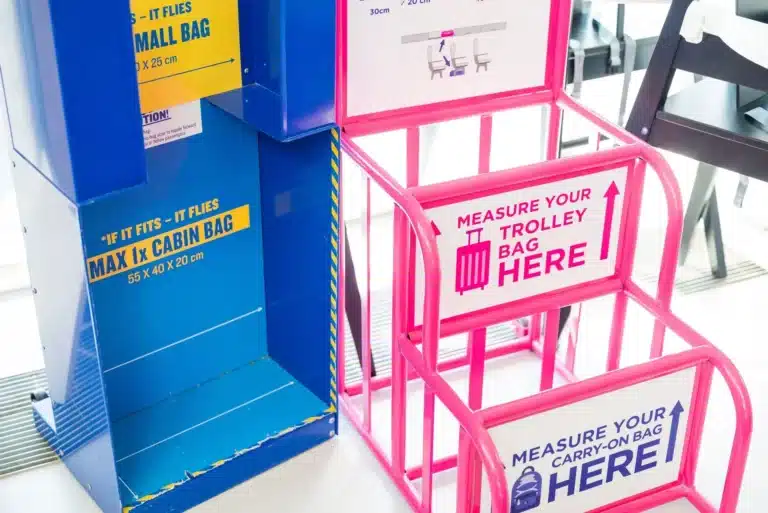
For the cabin baggage, The restrictions are even stricter. Authorised height and weight vary from company to company, but rarely exceed 10 kg or dimensions of 55 x 40 x 20 cm. For example, some low-cost airlines such as EasyJet or Ryanair now charge for any cabin baggage exceeding these limits or requiring placement in the overhead compartment.
These restrictions mean that travellers have to choose between travelling lightly loaded or paying extra to transport their belongings, which can quickly drive up the price.
Facilitating transport and organisation
From standardised luggage are enabling more efficient organisation of on-board storage space. This applies both to trains in France and to trains in Europe linking cities such as Amsterdam, Lyon and Marseille.
Responses to past incidents
These measures follow situations where non-compliant baggage has caused delays or complications. For example, some cases involved bulky items that were not allowed on board trains, such as OUIGO or the lines between Paris and Bordeaux.
What impact will the restrictions have on SNCF train travel?
Changes for frequent users
Daily commuters will have to adjust their packing habits and allow more time for boating. Regular users of routes such as the TER or regional train will be able to take advantage of offers and advice to optimise their luggage.
Considerations for long-distance rail travel
Passengers on long-distance trains may have to send bulky luggage, such as large suitcases, via third-party transport services such as LRC Lugagerie. Train tours or journeys between France and Italy, Spain or Germany sometimes require additional planning.
Advice for families and groups
During a travel by SNCF train When travelling as a family or in a group, good planning and sharing luggage are often essential. By choosing destinations that are accessible and offer appropriate services, organising the journey, particularly with children, becomes much simpler.
Risk of fines and charges for non-compliance
Since 16 September 2024, SNCF has been strictly applying its new baggage regulations. Users who fail to comply with these rules now face financial penalties. A fine of 50 euros per item of luggage will be applied. This penalty can be as high as 150 euros if the baggage is considered to be a nuisance or dangerous. It is important to note that these fines will be distributed by the captains and boarding agents, who are responsible for enforcing these new rules.
The company justifies this measure by the need to ensure the safety and comfort of all passengers, and to facilitate movement on board trains. To avoid these penalties, it is therefore crucial to preparing for your trip by sncf train and scrupulously respect the size and number of baggage items authorised.
Comparison with baggage rules of other carriers
Notable differences with airlines and other rail companies
The rules of SNCF, Although they are stricter than they used to be, TGV baggage restrictions are generally more flexible than those imposed by airlines, particularly in terms of additional baggage charges. For example, restrictions on TGV baggage are often more flexible than those imposed by low-cost flights. For travel by SNCF train across France or Europe, many travellers prefer this option, often judged to be more advantageous in terms of fares and conditions than flying.
Our tips for adapting to the new restrictions on SNCF train travel!
- Respect the limits luggage: You can take either 2 suitcases + 1 piece of hand luggage, or 1 suitcase + 1 piece of special luggage + 1 piece of hand luggage.
- Check the dimensions Hand baggage must not exceed 40 x 30 x 15 cm, suitcase 70 x 90 x 50 cm, and special baggage 90 x 130 x 50 cm.
- Label all your luggage: This is compulsory and helps to identify them in case they are forgotten.
- Store properly Luggage: Place hand luggage under your seat or above it, and larger items in the dedicated spaces.
- Travel light Make sure you can carry all your luggage at once.
- Use a cover Bicycles, musical instruments, snowboards and skis must be in labelled cases.
- Consider paid options For OUIGO, subscribe to the luggage option (€5) if you have extra or bulky luggage.
By following these tips, you can avoid additional costs and travel with peace of mind in compliance with the new SNCF rules.
Frequently asked questions about baggage restrictions when travelling by SNCF train
What should you do if your baggage exceeds the restrictions?
Additional charges may apply, and baggage may be refused on board. Solutions such as advance shipment are recommended. Travelling with luxury trains or panoramic vehicles could offer additional options for transporting luggage.
How do these restrictions affect people with special needs?
Exceptions may be made for medical devices or mobility aids. Passengers concerned should contact Customer Service via SNCF Connect to obtain the necessary information.
Travelling by SNCF train: Choose the right solutions for your luggage
In short, the new baggage restrictions are designed to improve the safety and efficiency of the travel by SNCF train, This can be a challenge for travellers used to greater flexibility.
Whether you are planning to leave Paris or exploring other major cities, good planning and appropriate strategies can minimise the inconvenience. Travelling by train in France and Europe remains a unique experience for discovering magnificent landscapes and exceptional destinations. In the future, these rules may evolve to better meet travellers' needs.
To simplify your journeys and a smooth journey, opt for LRC Lugageriea door-to-door delivery service that takes care of shipping your suitcases to your destination.



 Français
  English (UK)
  Deutsch
  Español
  Italiano